

A Closer Look at DOJ’s Takedown Announcements
By Matthew DellaBetta · July 2, 2026
Every summer, the Department of Justice announces a coordinated “national health care fraud takedown,” unveiled with a headline dollar figure built to make news. The number is real, but by itself it tells you almost nothing. The last several years of DOJ and HHS-OIG data, however, tell a coherent story. Enforcement is growing larger, reaching into more of the country, and pulling in more state partners. The data also signals where enforcement is trending.
1. The number of defendants charged has climbed nearly 6x since 2023
The most obvious trend is sheer volume of prosecutions. In 2023, DOJ announced charges against 78 defendants. Three years later, in June 2026, that figure reached 455, a nearly six-fold increase. The two most recent years each set a different record: 2025 alleged the most fraud by dollars (about $14.6 billion, though a single transnational scheme accounted for roughly $10.6 billion of it), while 2026 charged the most people. Interestingly, while DOJ has charged more defendants year-over-year, the number of licensed medical professionals prosecuted has not grown at similar rate.
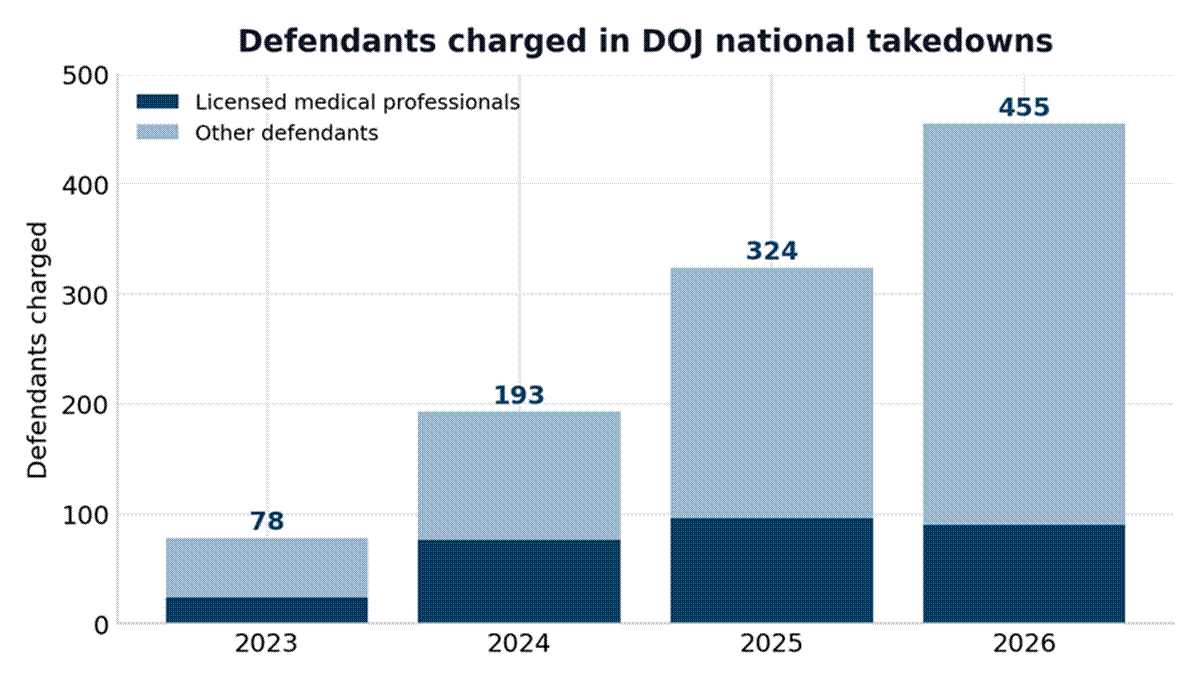
Source: DOJ Office of Public Affairs press releases — 2023, 2024 (per HHS-OIG), 2025, 2026.
2. DOJ is bringing prosecutions in a growing number of federal districts
Enforcement is also spreading geographically. The number of federal districts where cases have been filed rose from 17 in 2023 to 56 in 2026. The Fraud Section has also built out regional Health Care Fraud Strike Forces to match, including a new West Coast Strike Force covering Arizona, Nevada, and Northern California. For years, health care fraud enforcement was concentrated in a handful of hot spots, above all South Florida and Houston. That is no longer true.
Source: DOJ OPA press releases (2024–2026). In 2026, DOJ also reported cases across 45 states and territories.
3. States are increasingly prosecuting health care fraud cases
The third trend is the deepening role of the states. In 2023, only 3 State Attorneys General’s offices prosecuted cases alongside DOJ. By 2025 that number was 12, and in 2026 the DOJ highlighted 50 participating state Medicaid Fraud Control Units. More state partners means more agencies feeding data into investigations and more prosecutors pursuing parallel Medicaid cases, which multiplies both the ways a provider can be flagged and the forums in which the same conduct can be pursued.
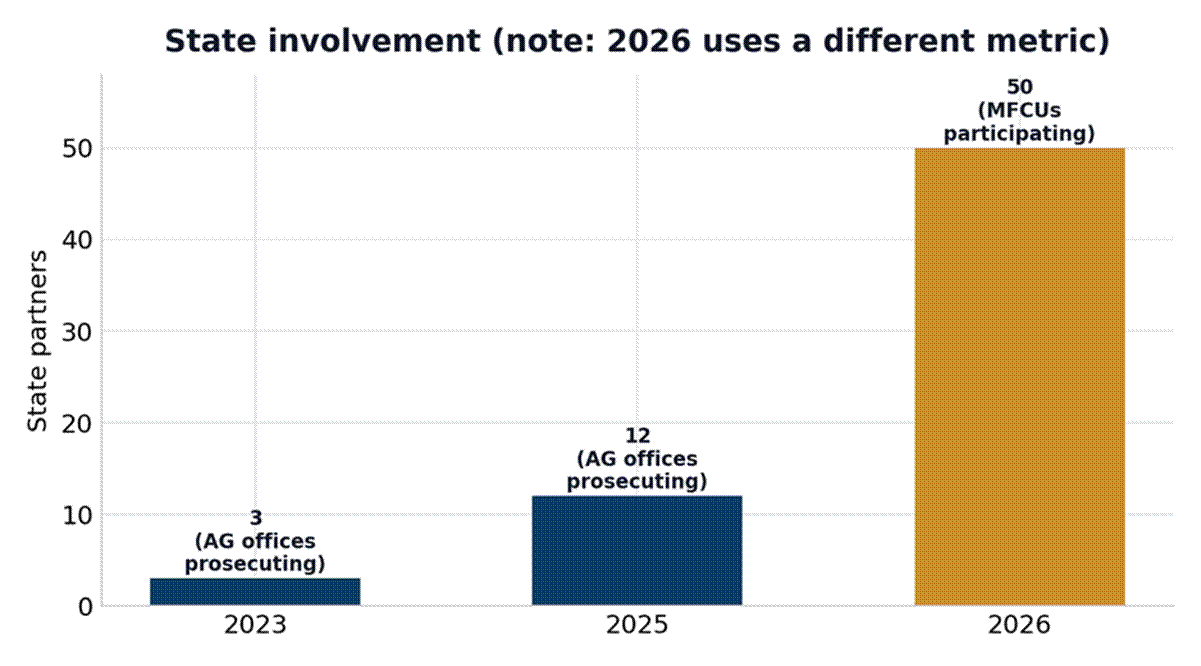
Source: DOJ OPA press releases.
4. Enforcement related to skin substitutes, amniotic-derived products, and other grafts will dramatically increase
DOJ’s 2026 press release also highlighted a select number of prosecutions related to skin substitutes. Expect enforcement in this area to dramatically expand as Medicare spending in this sector has ballooned. Medicare Part B spending on skin substitutes, amniotic-derived products, and other grafts used on chronic wounds, grew from $256 million in 2019 to more than $10 billion in 2024. That is roughly a forty-fold increase, and by 2024 these products accounted for over 15 percent of all Part B drug spending.
HHS-OIG attributed the surge to more enrollees billed, more units billed per patient, and rising per-unit prices, all encouraged by a reimbursement structure (average sales price plus six percent, with wide “spread” opportunities) that rewarded the most expensive products. Investigators found the billing concentrated among a small number of providers, some applying grafts to hospice patients and to minor wounds that did not call for them.
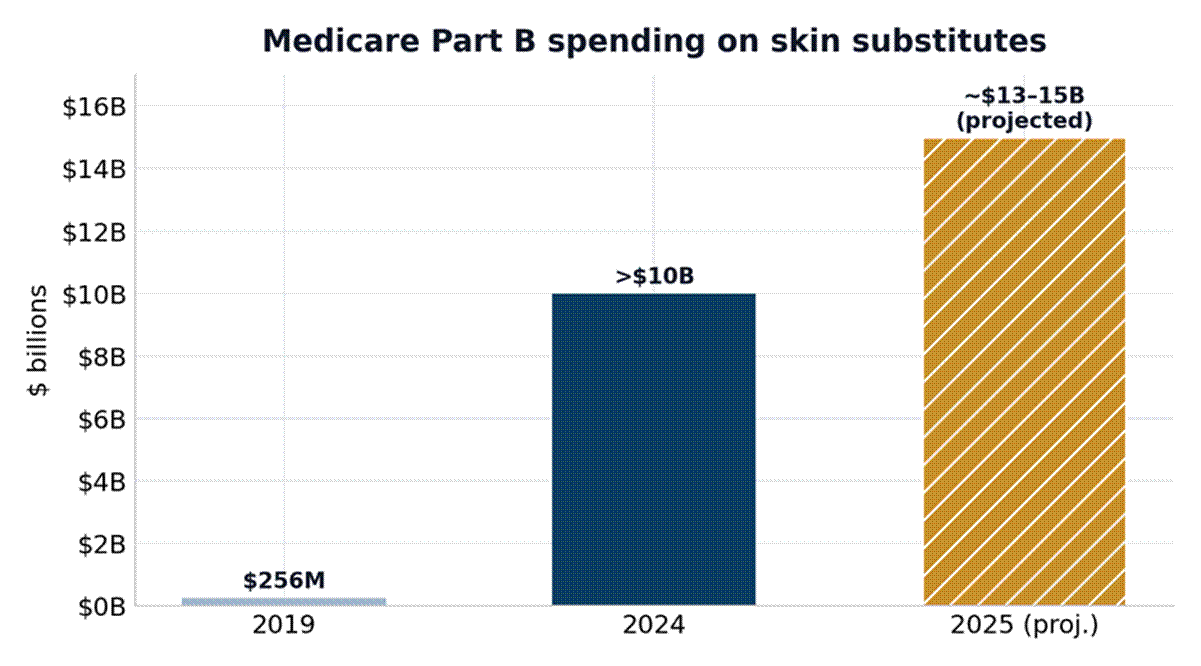
Source: HHS-OIG, “Medicare Part B Payment Trends for Skin Substitutes” (OEI-BL-24-00420, Sept. 2025): $256M in 2019 to over $10B in 2024 (~40x). The 2025 figure is a projection (~$13–15B) reported by MedPage Today and industry analysts (shown hatched). Intermediate years (2020–2023) are omitted because OIG reported them only in aggregate.
CMS’ 2026 Physician Fee Schedule now sets a single rate of roughly $127 per square centimeter for most skin substitutes in physician offices. CMS believes that this will reduce fee-for-service spending on these products by billions. But payment reform going forward does not erase the billing that already happened. The years of elevated spending are precisely the claims that audits, civil investigative demands, and subpoenas will target. A wound-care provider should assume its 2023–2025 billing may be examined regardless of how the rules change in 2026.
Overall, these numbers describe enforcement that is bigger, broader, faster, and increasingly automated Because federal prosecutors, state Medicaid units, and CMS increasingly act in parallel, a single set of facts can generate criminal, civil False Claims Act, and administrative payment-suspension exposure at the same time. If the last several years are any guide, expect the next takedown to be bigger, broader, and aimed at wherever the spending has moved.
